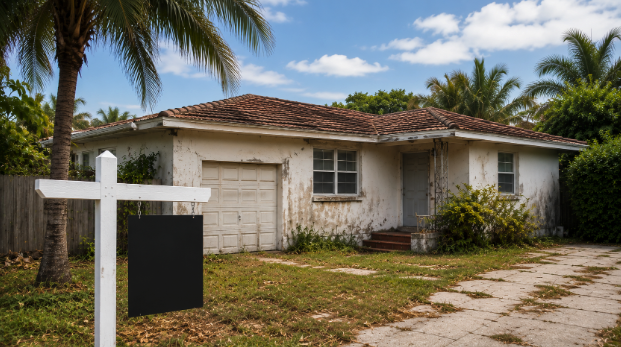
The house needs work you can’t afford, or won’t. The clock is running for reasons unrelated to the real estate market. You’re not looking for a lecture on curb appeal. You’re looking for a way out that doesn’t cost you more than staying.
Selling a house as-is in Miami means accepting an offer without completing repairs, upgrades, or cosmetic improvements before closing. For homeowners facing time pressure, financial strain, or properties in poor condition, it’s often the fastest path to a clean exit. Cash buyers like Sell To Bobby can close in as little as 7 days, with no fees, no repairs, and no open houses.
Key Takeaways
- Selling as-is skips repairs but doesn’t skip the market. Your price reflects the condition, and that’s the honest tradeoff.
- Cash buyers close faster because there’s no mortgage approval process to wait on. The speed is structural, not a sales pitch.
- Traditional listing can net more money in some situations, but it takes longer and costs more upfront. The gap narrows fast when you factor in carrying costs.
- Not every as-is buyer is the same. Sell To Bobby handles closing costs and offers flexible closing dates chosen by the seller.
- If the property has serious structural issues, title complications, or is in foreclosure, a cash sale is often the only option that actually closes on time.
What Does “Selling As-Is” Actually Mean in Florida?
Selling as-is is a legal designation, not a magic phrase. It means you’re disclosing the property’s condition and selling it without agreeing to make any repairs before closing.
Florida law still requires sellers to disclose known material defects. Selling as-is doesn’t erase that obligation. What it does is shift the repair decision entirely to the buyer. They can inspect, they can walk away, but they can’t come back and ask you to fix the roof.
This matters because many sellers assume that “as-is” means “no questions asked.” It doesn’t. It means “no repairs required.” That distinction changes how you should think about pricing and buyer selection.
Why Do Homes Sit on the Market When Listed As-Is Through an Agent?
Here’s the friction point most sellers don’t see coming: listing as-is on the MLS attracts buyers who need financing, and lenders have opinions about property condition.
If a home has a failing roof, foundation cracks, mold, or no working HVAC, a conventional lender will often refuse to fund the purchase. FHA and VA loans are even stricter. So your “as-is” listing pulls in buyers who then can’t get approved for the loan they need to close. The deal falls apart at underwriting, not at the offer stage. You’ve lost 30 to 60 days, and you’re back to square one.
The problem isn’t the listing. It’s that the buyer pool for a distressed property and the buyer pool for financed purchases barely overlap.
Cash buyers don’t have a lender in the room. That’s why the process is faster. It’s not a marketing claim. It’s a structural difference in how the transaction works.
The As-Is Decision Framework: Three Conditions That Determine Your Best Path
The As-Is Decision Framework is a three-condition diagnostic that helps sellers identify which exit path fits their actual situation, not their ideal one.
Use it before you call anyone.
Condition 1: Time pressure. If you have 60 or more days and no financial urgency, a traditional listing with an agent might recover more value. If you have 30 days or less, or if carrying costs are eating into any potential premium, a cash sale wins on math, not just convenience.
Condition 2: Property condition. If the home needs less than $15,000 in cosmetic work and has no structural or title issues, a traditional as-is listing can work. If it needs more than that, or has deferred maintenance that will trigger lender flags, you’re looking at a buyer pool that can’t close.
Condition 3: Emotional cost. This one gets left out of every financial comparison. Open houses, showings, negotiations, inspection contingencies, and deals falling through have a real cost. Not a dollar cost. A cost in time, stress, and decision fatigue. If you’re already dealing with divorce, a death in the family, foreclosure, or relocation, adding 90 days of listing uncertainty isn’t neutral. It’s a weight.
Use this when you need to make a fast, clear decision. Skip it if your situation is genuinely simple and you have time.
What Happens When You Request a Cash Offer from Sell To Bobby?
The process is short. You contact Sell To Bobby, share basic information about the property, and receive a no-obligation cash offer within 24 hours. There’s no pressure to accept, no fees for getting the offer, and no cost if you walk away.
If you accept, you pick the closing date. That flexibility matters more than people expect. Some sellers need to close in 7 days. Others need 45 days to move out, settle an estate, or coordinate a relocation. Sell To Bobby covers all closing costs, eliminating one of the most common last-minute surprises in a traditional sale.
Sell To Bobby has bought and sold hundreds of homes throughout Miami and Florida, including properties with structural damage, title complications, probate situations, and significant deferred maintenance. The offer reflects the condition. What you don’t get is a deal that falls apart because a lender got cold feet.
If you’re past the information-gathering stage and ready to know what your house is actually worth in cash, requesting an offer costs you nothing and takes less than a day to find out.
How Does a Cash Sale Compare to the Main Alternatives?
| Factor | Cash Sale (Sell To Bobby) | Traditional Listing (Agent) | FSBO As-Is |
| Time to close | 7 to 30 days are typical | 60 to 120 days is typical | Unpredictable |
| Repairs required | None | Often requested after inspection | Negotiated |
| Closing costs | Covered by the buyer | Typically, 6 to 10% of the sale price | Varies |
| Deal fall-through risk | Low (no lender) | High for distressed properties | High |
| Flexibility on the closing date | Yes, the seller chooses | Limited by the buyer’s financing | Limited |
| Best for | Time pressure, poor condition, estate, foreclosure | Move-in-ready or near-ready homes | Sellers with time and real estate knowledge |
The traditional listing wins on gross sale price in the right conditions. A move-in-ready home in a strong Miami neighborhood, listed at the right time, can attract multiple offers and sell above asking. That’s real. But it requires a home that’s ready, a seller who can wait, and a deal that doesn’t collapse at underwriting.
FSBO sounds like it saves money. In practice, it costs sellers the most because pricing errors, contract mistakes, and failed negotiations eat the commission savings and then some. It’s the option that looks cheapest on paper and performs worst in execution.
A Common Scenario: What the Numbers Actually Look Like
Consider a property in Miami-Dade that needs a new roof (estimated at $18,000), has some water damage in two rooms, and has been sitting vacant for eight months. The owner inherited it and lives out of state.
A traditional listing might attract offers, but financed buyers can’t close because the lender requires the roof to be replaced first. The seller either fronts $18,000 for repairs they can’t oversee from another state, or the listing sits. Every month of vacancy adds carrying costs: property taxes, insurance, utilities, and the risk of further deterioration.
A cash offer from a buyer like Sell To Bobby reflects the repair cost in the price, but closes in days. The seller avoids the $18,000 repair outlay, the months of carrying costs, and the coordination burden of managing a renovation from out of state. The net difference between the two paths is smaller than the gross price difference suggests, and the cash path is the one that actually closes.
Waiting feels like a strategy. It’s usually just a more expensive version of the same outcome.
Who Should Not Use a Cash As-Is Sale?
This approach isn’t the right fit for every situation. Be honest with yourself about where you actually fall.
If your home is in excellent condition and you have 90 days or more before you need to move, a traditional listing will likely get you more money. The premium a cash buyer pays for speed and certainty comes from somewhere, and in a strong market with a clean property, you can capture that difference yourself.
If you’re in a position to do light cosmetic repairs (fresh paint, landscaping, minor fixtures), the return on that investment in a traditional sale often outpaces the cost. That math changes fast if the repairs are structural, but for surface-level work, it’s worth running the numbers.
Sell To Bobby is built for situations where time, condition, or complexity makes the traditional path impractical or impossible. That covers many Miami homeowners. It doesn’t cover everyone.
Frequently Asked Questions
How does a cash buyer determine the offer price?
Cash buyers price offers based on the property’s current condition, the estimated cost of repairs, and the local resale value after those repairs are made. The offer is lower than the retail sale price because the buyer is absorbing the repair risk and cost. That’s the honest tradeoff: you skip the repair work, and the price reflects that.
Will I owe taxes if I sell my house for cash in Florida?
Selling for cash doesn’t change your federal or state tax obligations. Florida has no state income tax, but you may owe federal capital gains tax depending on how long you’ve owned the property and whether it was your primary residence. A tax professional can tell you what applies to your specific situation before you close.
Can I sell a house in foreclosure for cash in Miami?
Yes, and timing matters a lot. As long as the foreclosure hasn’t gone to final judgment and the property hasn’t been sold at auction, you can sell. A cash buyer can close fast enough to stop the process. The longer you wait, the fewer options you have, which is why reaching out early gives you more control over the outcome.
What if the title has problems or the estate isn’t fully settled?
Title issues and probate complications don’t automatically kill a cash sale, but they do require attention before closing. An experienced cash buyer like Sell To Bobby has worked through these situations before. The key is to disclose what you know up front so the buyer can assess the title situation and make an accurate offer.
Do I have to clean out the house before selling?
With a cash as-is sale, you don’t have to. Many sellers leave behind furniture, personal property, or years of accumulated belongings. Sell To Bobby buys the property in its current state. You take what you want and leave the rest.
How is Sell To Bobby different from iBuyers or other cash buyer companies?
iBuyers typically use automated pricing models and operate within strict condition and location parameters. They often charge service fees that offset the convenience. Sell To Bobby is a direct buyer that evaluates each property individually, covers closing costs, and works with properties in any condition, including those iBuyers won’t touch.
What happens if I get a cash offer and decide not to accept it?
Nothing. The offer is no-obligation. You’re not locked in, you don’t owe a fee, and there’s no penalty for walking away. The only thing you’ve spent is the time it took to get the offer, which is typically less than 24 hours.
The fastest way to know what your house is actually worth in cash is to ask. Sell To Bobby provides free cash offers within 24 hours, with no obligation and no fees. If you’re a Florida homeowner dealing with a property you need to move quickly, that’s the clearest next step available to you.
About the Author
Sell To Bobby is a direct-cash home-buying company serving homeowners throughout Miami and Florida. They specialize in purchasing properties in any condition, with no repairs required, no agent fees, and no closing costs to the seller. Sell To Bobby works with homeowners facing foreclosure, inherited properties, divorce, relocation, and other situations where a fast, certain close matters more than waiting for the highest possible offer.